
Talking about Prosper Mérimée is to enter one of the key moments in which European literature established a lasting -and powerful- image of Andalusia in the Western imagination. His short novel Carmen, published in 1845, not only gave rise to one of the most influential female characters in the history of literature and opera, but also contributed decisively to the construction of a romantic, intense and contradictory vision of southern Spain.
Carmen is not only a story of passion and tragedy. It is the result of a foreign gaze, cultured and fascinated by Andalusia, which mixes direct observation, erudition and the codes of 19th century European romanticism.
Prosper Mérimée and the discovery of Andalusia
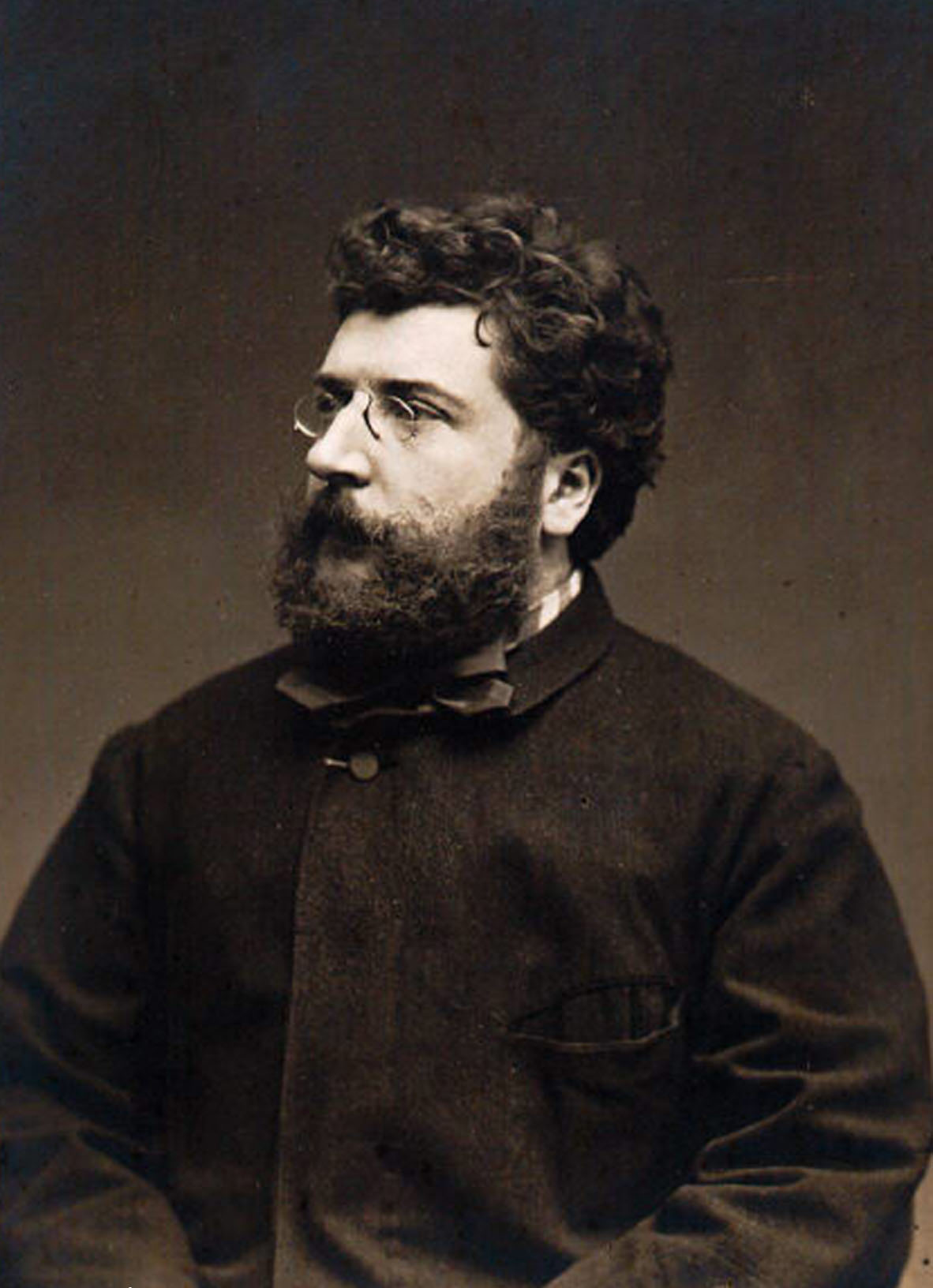
Prosper Mérimée came to Spain on several occasions during the 1830s. Unlike other romantic travelers, he was not a simple tourist attracted by the exotic, but an intellectual with historical, linguistic and anthropological training. His interest in Spain-and especially Andalusia-focused on its traditions, history and social margins.
During his stays, Mérimée visited cities such as Seville observing with attention the daily life, the popular customs and the social contrasts of the time. These experiences would be the literary basis on which he would build Carmen.
Carmen: argument and rupture with classic female models
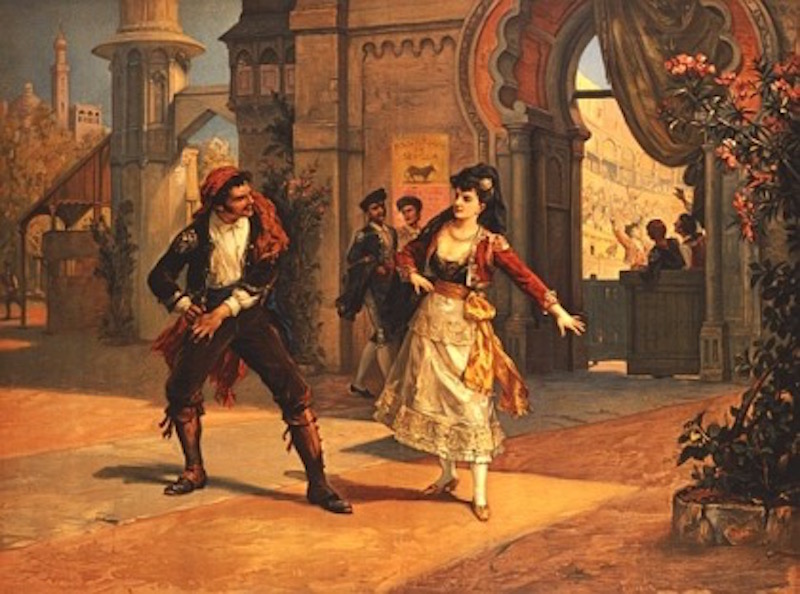
The novel Carmen tells the story of a gypsy woman, free and indomitable, who lives by her own rules and rejects any form of submission. Her relationship with Don José, a soldier from Navarre, becomes a spiral of passion, jealousy and violence that inevitably leads to tragedy.
What is truly revolutionary about Carmen is not only its outcome, but its protagonist. Carmen breaks with the idealized feminine models of traditional romanticism: she is not a victim, nor a passive muse, nor a redeemer. She is an autonomous character, aware of her power and the consequences of her decisions.
This portrait had a profound impact on the European public of the 19th century.
Seville as a literary and symbolic setting
The action of Carmen takes place mainly in Seville, a city that Mérimée presents as a space of contrasts: order and marginality, authority and transgression, tradition and latent violence. Places such as the old Royal Tobacco Factory -where Carmen works as a cigarette-maker- are not casual settings, but symbols of an industrial, popular and deeply hierarchical city.
Mérimée’s Seville does not pretend to be an accurate documentary portrait, but a literary construction loaded with meaning, where space reinforces the character of the characters and the narrative tension.
Romanticism, exoticism and a foreign gaze
Carmen is fully inscribed in the context of European romanticism, which sought in southern Europe what it considered passion, freedom and primitivism as opposed to the rationality of the north. Andalusia became, for many writers and artists, a symbolic territory where to project desires, fears and fantasies.
Mérimée’s work participates in this trend, but with an important difference: his direct knowledge of the territory and his capacity for observation bring a cultural density that goes beyond simple exoticism.
From novel to opera: the myth is universalized
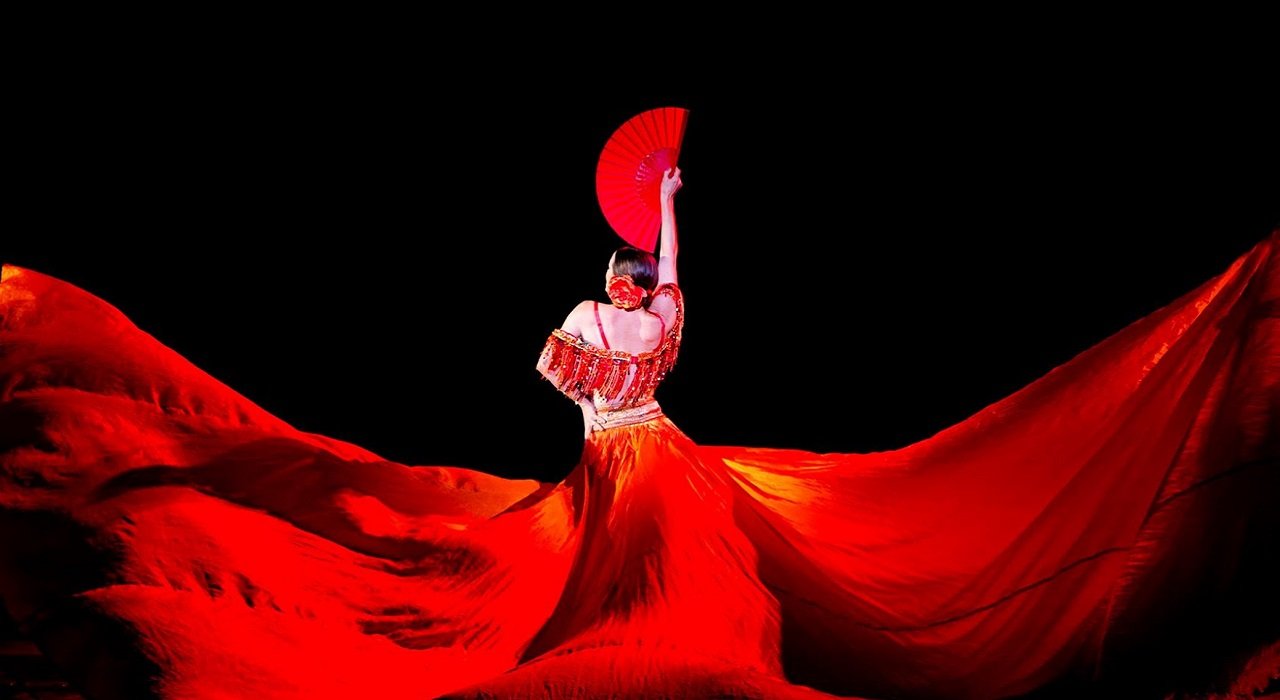
Although Mérimée’s novel was successful, it was Georges Bizet’s operatic adaptation that turned Carmen into a universal myth. The opera amplified the passionate, musical and visual elements of the story, definitively fixing Carmen’s image in popular culture.
Since then, Carmen has been reinterpreted in countless versions, becoming a global symbol associated with Spain, Seville and Andalusia, although often far from the original complexity of the literary text.
Carmen and the construction of the Andalusian imagery
The importance of Carmen lies not only in its literary value, but also in its ability to influence the international perception of Andalusia. The work contributed to consolidate certain archetypes -the free woman, the bandit, the smuggler, the unbridled passion- that still today are part of the collective imagination.
Comprender Carmen implica, por tanto, comprender cómo se ha construido históricamente la mirada sobre Andalucía desde fuera, y cómo esa mirada ha dialogado —no siempre de forma justa— con la realidad local.
Carmen as a cultural experience in Andalusia
To tour Seville through Mérimée’s eyes is not to follow a literal itinerary, but to interpret the city as a narrative space. The old Tobacco Factory, the Triana neighborhood, the banks of the Guadalquivir or the spaces linked to popular life allow us to contextualize the work and understand its social background.
Integrating literature, history and the city transforms the visit into a profound cultural experience.
Text: Andalusia Experiencias
Images: Teatro de Valencia, Wikicommons